

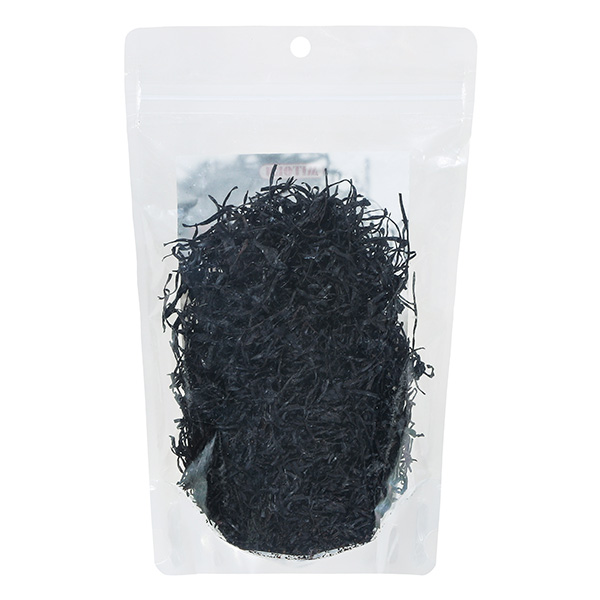
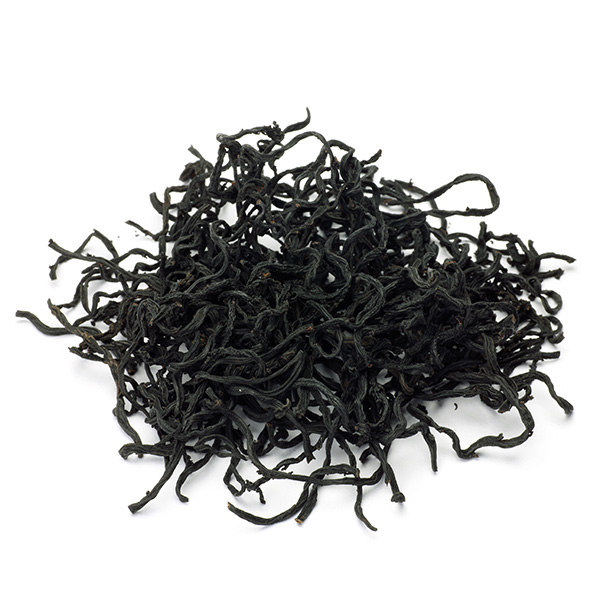
Like hijiki, arame is a brown algae, albeit with a milder taste. Young, tender wild plants in the Ise-Shima region of Japan are harvested in late summer, finely shredded, and processed. Arame is valued for its high mineral and fiber content and gentle, sweet flavor, making it a perfect ingredient to enrich your everyday dishes such as salads, stir-fries, and noodle dishes.
-
Packaging options
Available in 50g bag and 1kg, 10kg carton among arame varieties
-
How to use
Hijiki is very attractive when properly cooked and presented. Its shimmering black color adds vivid contrast and beauty to any meal. When planning a meal that includes hijiki, try to use foods with colors that create an attractive contrast to its dark color. Carrots, winter squash, and pumpkin offer deep orange colors, while lightly steamed broccoli and watercress provide bright green tones. Cold hijiki salad topped with a creamy white tofu dressing and a sprinkle of finely minced green onion or parsley presents an attractive contrast of colors and is particularly appealing on a hot summer day. Although hijiki and arame are prepared in similar ways, there are a few important differences. Hijiki is thicker, somewhat coarser, and has a strong ocean flavor. Arame’s considerably milder aroma and taste make it a good choice for anyone just beginning to use sea vegetables.
Both should be rinsed quickly but carefully to remove foreign matter such as sand and shells, then covered in water and soaked. However, because of the difference in their textures, hijiki should be soaked for ten minutes, while the more delicate arame needs only five. Longer soaking draws out the important nutrients and waterlogs these vegetables, making them less able to absorb the flavors of seasonings.
If you use the soaking water in cooking, pour it in carefully so as not to accidentally add any sand or shells that may have sunk to the bottom. Reserve a small amount in the bowl and then discard it. Using the soaking water strengthens the flavor slightly and reduces the need for added salt or shoyu. The recipes that follow are written with freshly drawn water in mind, so if you choose to use soaking water, cut the amount of shoyu in half and add more only if needed.
Soaking increases the dried volume of arame and hijiki by about three times, so please take this into consideration. One cup of dried hijiki will become three cups when soaked. For general preparation, squeeze out excess water after soaking and sauté the sea vegetable in a little oil for a few minutes. Add soaking water or fresh water to almost cover and simmer until the vegetables are tender and most of the liquid has been absorbed (about 35 minutes for hijiki and 25 minutes for arame). Finally, season the tender vegetables with shoyu and mirin (if desired), and cook for a few minutes more. Both hijiki and arame are delicious when sautéed with sweet vegetables such as carrots, slow-cooked onions, winter squash, lotus root, shiitake, and dried daikon radish. Hijiki and arame are also delicious when served with deep-fried fresh tofu or when sautéed with dried tofu. A little chopped hijiki or arame can be combined with cooked rice, millet, or barley. Hijiki and arame are good additions to salads, especially when topped with a tofu dressing.