
The Original Hatcho Miso
Hatcho Miso: A One-of-a-Kind Flavor Rooted in Centuries of Tradition
Miso is eaten all across Japan, but the way it is made and its flavor, vary by region. Among them, the one considered particularly distinctive is soybean miso, mainly produced in Aichi Prefecture, where our Hatcho miso producer located.
Unlike rice miso or barley miso, which are made by combining rice or barley koji with steamed (or boiled) soybeans and salt, soybean miso is made by turning soybeans directly into koji. The soybeans are steamed, mashed, and formed into balls on which koji mold (Aspergillusoryzae) grows to create soybean koji. Once the soybean koji is ready, salt and water are added to begin the fermentation process.
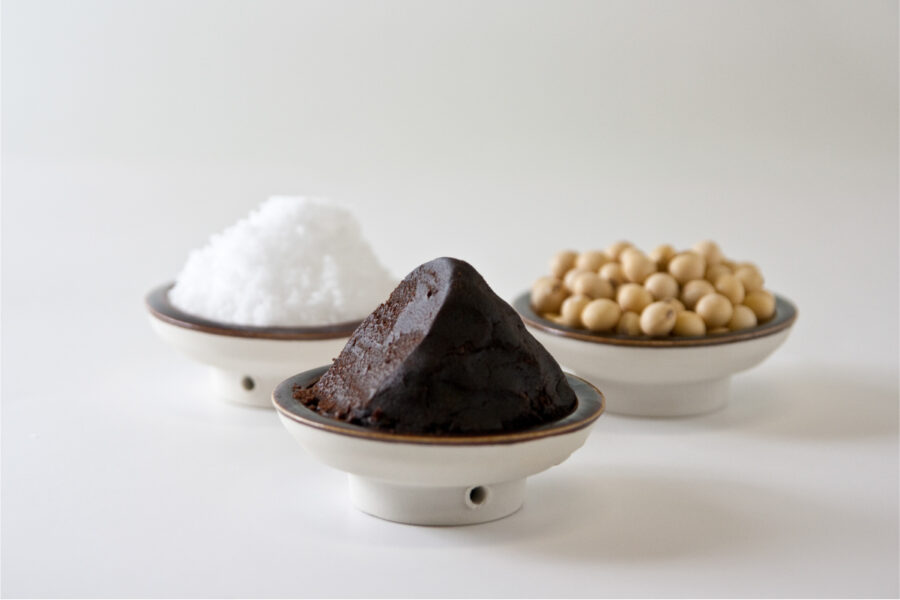
Although soybean miso is made with simple ingredients, the abundant proteins in soybeans are broken down by microorganisms into a wide variety of amino acids, resulting in a rich, complex umami and aroma.
Among all types of soybean miso, Hatcho Miso, produced in Okazaki City, Aichi Prefecture, stands in a class of its own. It is a miso that truly reflects the local climate and culture. The name “Hatcho” comes from Hatcho Village, present-day Hatcho-cho, located eight “cho” (equivalent to 870 meters) west of Okazaki Castle, the birthplace of Tokugawa Ieyasu, one of the most influential Shogun to this region.
This area was thriving as a key hub of transportation and trade connecting Tokyo to Kyoto, and also intersected with the Yahagi River, bringing together people, boats, goods, and information. The region was blessed with high-quality soybeans, salt, and an abundant supply of firewood and water.
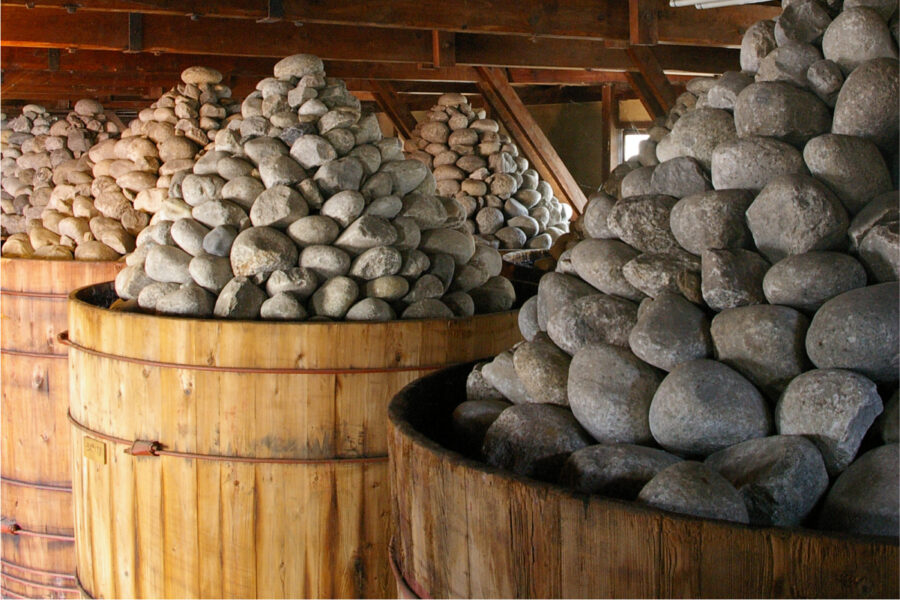
Under the pressure of 3 tons of stones the miso is left to fermented for over two years to become Hatcho Miso. With the 19th generation president, Kakukyu, Mitoku’s long standing producer, has been preserving Hatcho miso’s unique taste made only by the same time-honored traditional methods passed down for 380 years. Taste the unchanged taste the Shogunloved.
