

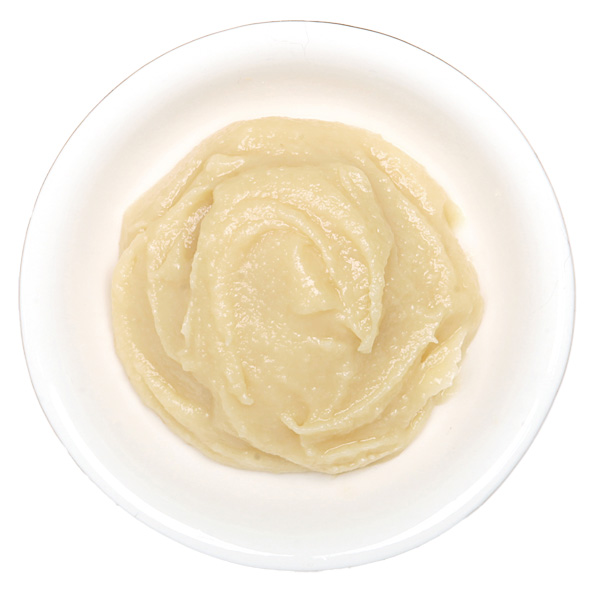
 This light and sweet Kyoto-style miso is made in small batches, with a large percentage of rice koji and a short fermentation process. The miso has a smooth and creamy texture with a characteristic pale-yellow color. Because of the high percentage of rice koji content, it has the lowest salt content of all our varieties. These unique characteristics make it ideal as a dairy substitute and works well in dips, creamy sauces, desserts, and even baking.
-
Packaging options
Available in 250g stand pouch and 1kg bag
-
Making
Miso is made by mixing koji, mashed soybeans, salt, and water, then leaving the mixture to ferment and mature. Different types of miso can be made by adding different types of koji to the mixture. Rice koji, for example, is used to make this sweet rice miso. There are many variables that go into shaping the taste of miso, ranging from the area of production, its climate, environment, and traditions, to the approach and specific ingredients selected by an individual producer.
This sweet white miso contains a large proportion of rice, which gives it its characteristic sweet flavor. The fermentation period is relatively short, resulting in a light color.
-
How to use
The key to fine miso cookery is not to overpower dishes with a strong miso taste, but to integrate the more subtle aspects of miso color and flavor in a gentle balance with other ingredients.
With respect to color, bright summer vegetables, such as sweet corn or yellow squash, and lightly cooked greens floating in the beautiful yellow to beige broth of a light miso soup are appealing in warm weather.
Certain general rules can be applied when cooking with light, sweet miso, such as opposed to dark, salty varieties. The light color, sweet taste, and creamy texture of sweet miso make it an excellent dairy substitute. For example, try a little sweet miso instead of milk, butter, and salt in creamed soups, and with tofu and lemon or rice vinegar in place of sour cream for dips and spreads.
To realize the full potential of sweet miso, explore its uses in salad dressings and sauces. Sweet miso and naturally brewed rice vinegar create a delicious tartness that is both refreshing and cooling. Known as su-miso, this combination has a long history in Japanese cuisine. Blended with your choice of ingredients such as oil, onion, dill or other herbs, rice syrup, tofu and tahini, sweet miso and rice vinegar complement each other perfectly in American style dressings, dips and sauces.
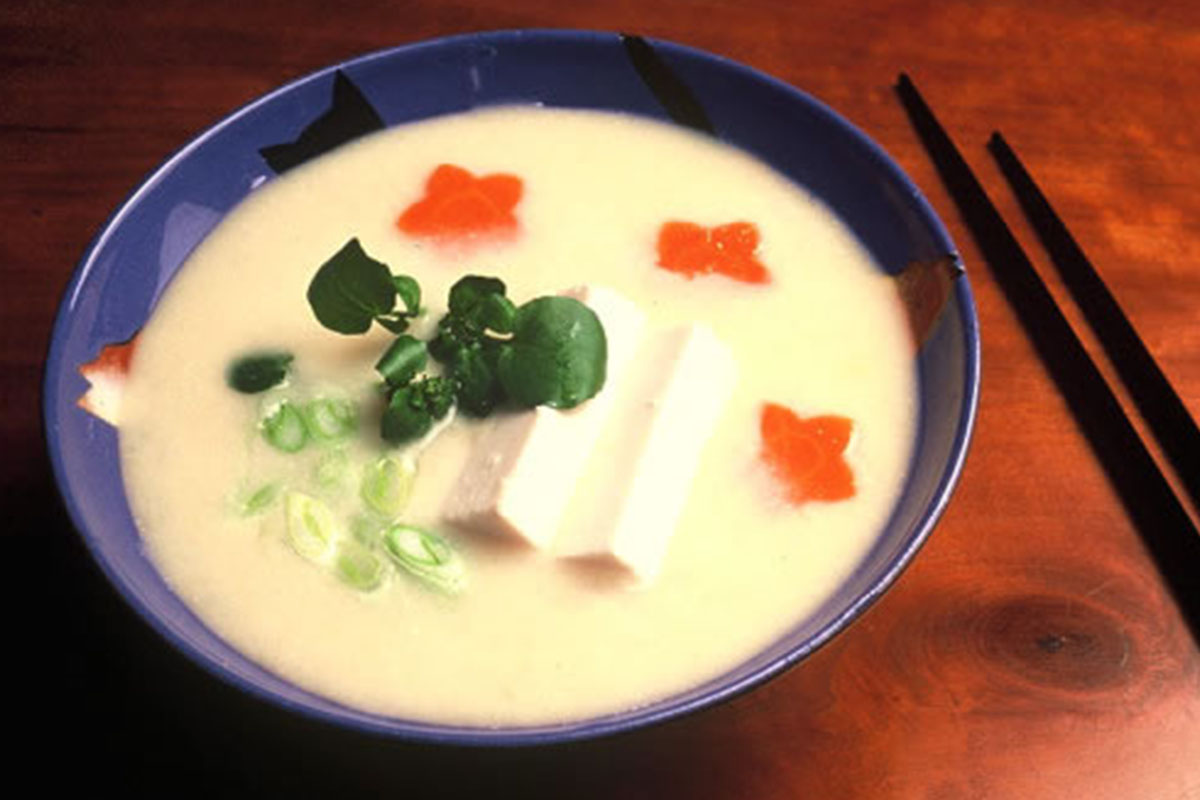
You can make delicious creamy miso soup with this miso. You can also combine sweet white miso with unpasteurized dark miso to make more nutritious, flavorful, and satisfying miso soups.
Both dark and light miso are suitable for certain special uses. In general, miso is a good choice when you are looking for a salting agent, digestive aid, or tenderizer.
As a salting agent, miso supplies much more in terms of flavor and nutrition than plain salt, without salt’s harshness. When substituting miso for salt, add approximately one level tablespoon of any sweet, light miso for one-quarter teaspoon salt.
For many people making the transition to natural foods, getting other family members on board can be a challenge, and for families with a commitment to healthy eating, cooking for guests who are not accustomed to this way of eating can be tricky. Miso helps bridge this gap. It brings a depth of savory flavor and a satisfying complexity to simple fare.