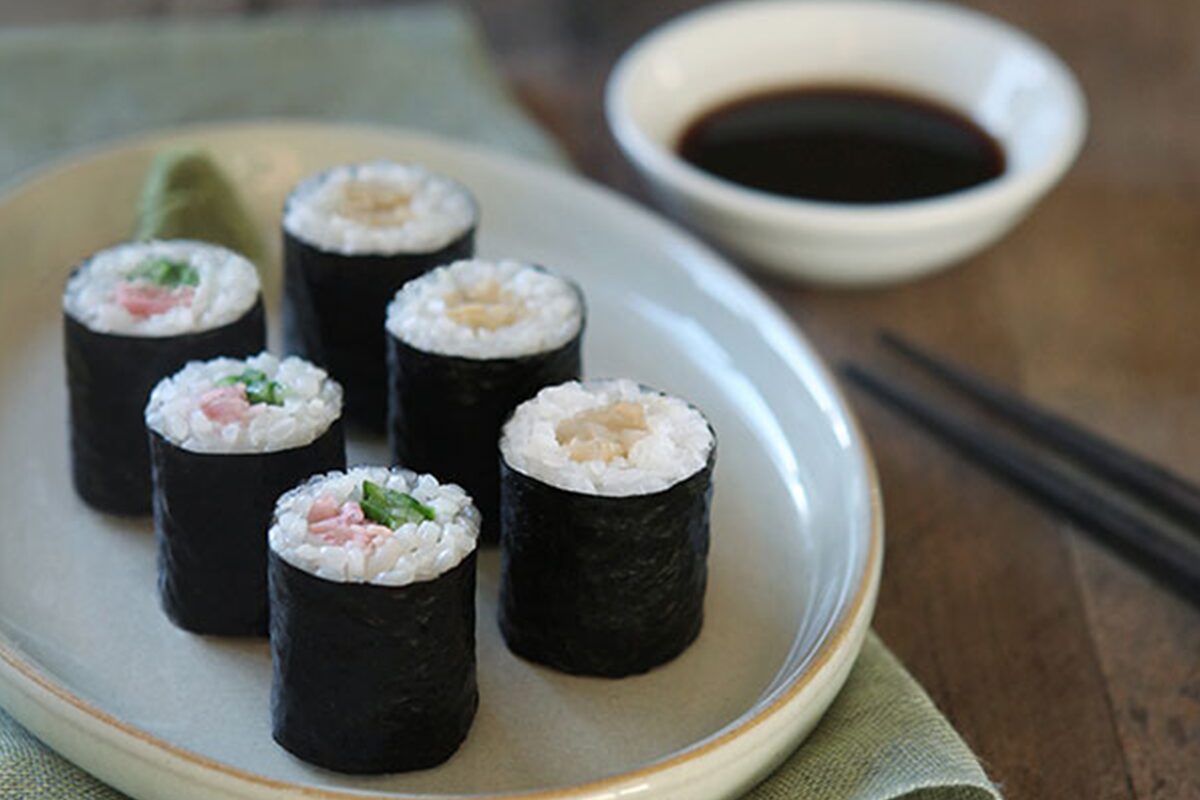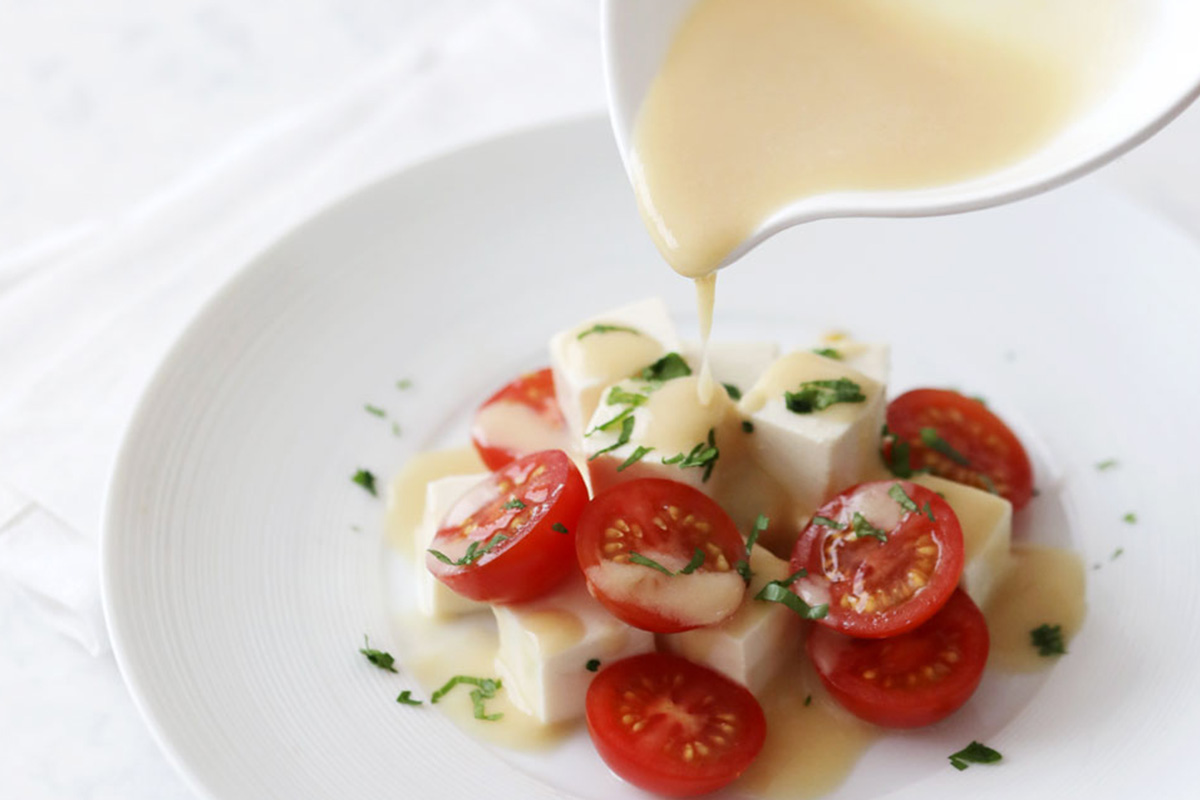


Takuan, meaning daikon (Japanese radish) pickled in rice bran and salt, is one of the most important and popular Japanese tsukemono. Our takuan is made using simple, traditional methods with no artificial additives, coloring, preservatives, or sugar. This flavorsome pickle has a satisfying, crunchy texture and works great as a tasty snack or as a side dish served with rice.
-
Packaging options
Available in 200g bag
-
Making
Creating the right environment for fermentation
The traditional pickling process used in Japan is technically known as “lactic acid fermentation”, one of nature’s oldest and safest ways of preserving food. The key to good pickling is the early establishment of lactic acid-forming bacteria before other bacteria have a chance to multiply. The latter, which can spoil pickling vegetables, cannot tolerate the high acidity produced by lactic acid bacteria or the high salt concentration used in most pickling methods. To help establish beneficial bacteria, traditional makers must use plenty of well-mixed salt and store developing pickles in a cool place (4-18 °C is ideal).Although roots such as ginger, carrots, and Japanese radish (daikon) are the most commonly used vegetables in Japanese pickling, other vegetables such as cucumber, burdock, eggplant, and even flowers are sometimes used. The key to making crisp, flavorful pickles, such as Mitoku’s Takuan and Sushi Ginger, is using fresh, clean vegetables, adding just enough high-quality salt, and creating a highly acidic pickling medium before the vegetables start to spoil.
How our daikon are grown
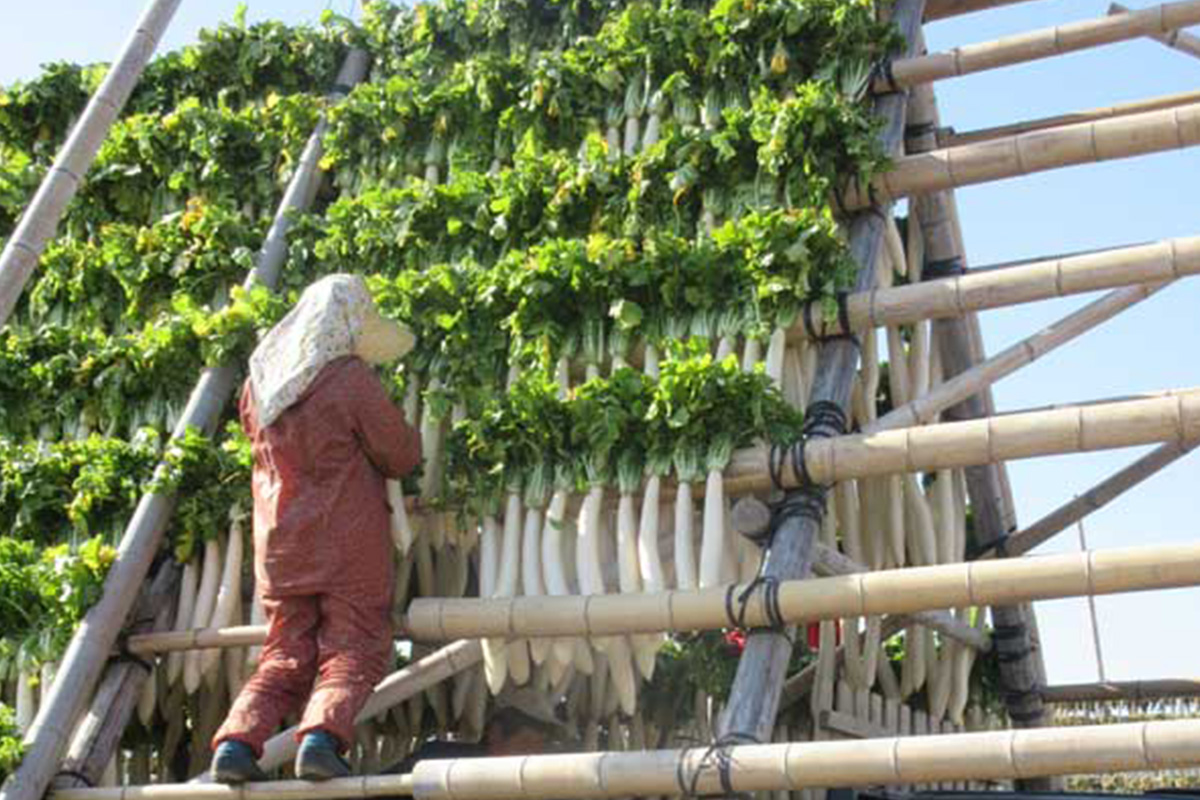
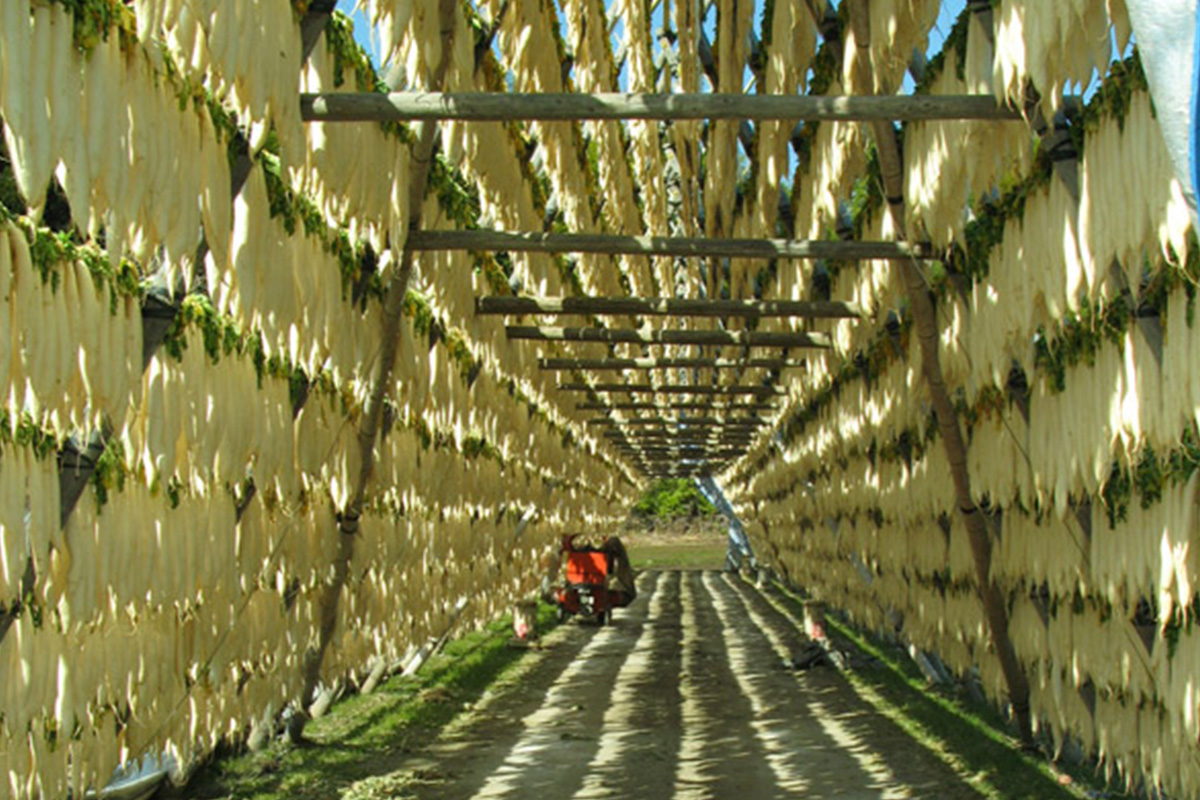
The daikon used in Mitoku’s takuan are produced in Miyazaki Prefecture, on the southern island of Kyushu, in a little village that just happens to be Japan’s no.1 producer of dried daikon. Various factors combine to make this area well suited to daikon cultivation. Firstly, the surrounding area is about 70% woodland. Secondly, in winter the temperature drops dramatically and the area is hit by dry winds. Both of these factors are said to be good for the crop. In addition, low rainfall means that temperature rarely reaches freezing point, sparing the daikon from frost damage. Furthermore, the soil in this area is high in volcanic ash with good water retention. This, it is said, results in fast-growing daikon with good elasticity and thin skins.Drying takes place in the cold winter months after the daikon are harvested. The daikon are suspended in rows on large triangular wooden frames called yagura and left to dry outdoors in the sun. These frames, which are about 5m high and 80m long, with the center wide enough to drive a car through, are erected without nails using just rope and bamboo. The great rows of daikon hanging suspended in the winter sun are quite a sight to behold! In the event of rainfall, the local farmers rush outside to cover the yagura with tarpaulin and protect the precious crops. This drying method is labor intensive and requires constant vigilance, but also results in a finished product with markedly superior flavor.
-
How to use
Rinse it lightly to remove the remaining bran and slice it for eating. It is often served in meals alongside a bowl of rice and miso soup in Japan. You can replace it with gherkin or pickled onion for a new taste.